
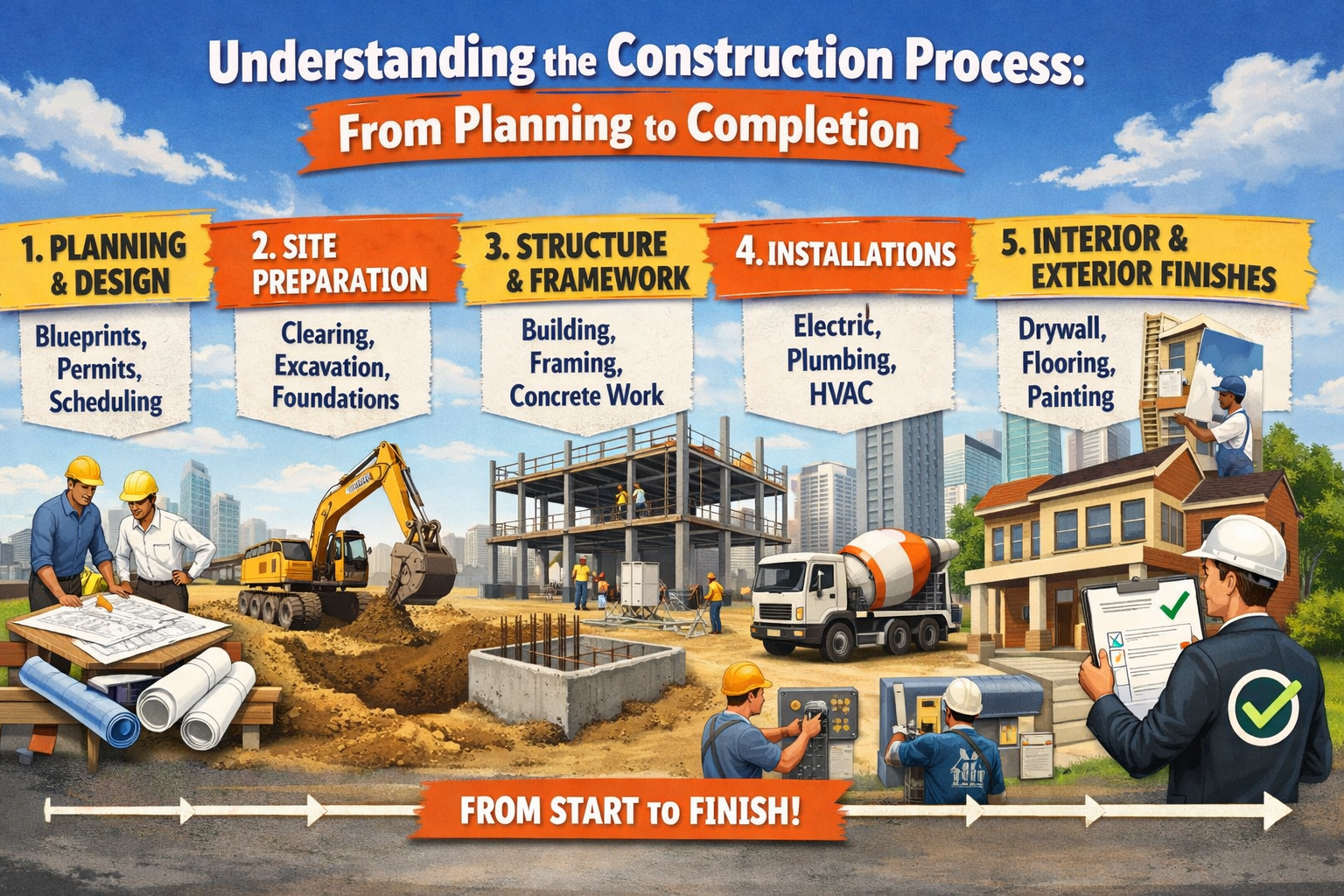
The construction process is a structured journey that transforms an idea into a functional, safe, and durable structure. Whether it’s a residential home, a commercial building, or infrastructure project, every construction effort follows a series of well-defined stages. Understanding these stages helps property owners, stakeholders, and aspiring professionals make informed decisions and manage expectations throughout the project lifecycle.
1. Planning and Feasibility
The construction process begins with planning and feasibility analysis. This stage focuses on defining the project’s purpose, scope, budget, and timeline. Key activities include site evaluation, initial design concepts, cost estimates, and risk assessments. Feasibility studies help determine whether the project is viable from financial, technical, and legal perspectives before significant resources are committed.
2. Design and Development
Once the project is deemed feasible, the design phase begins. Architects and engineers collaborate to create detailed drawings and specifications that outline structural, electrical, plumbing, and mechanical systems. During this stage, materials are selected, layouts are finalized, and sustainability or energy-efficiency goals may be integrated. The design phase often involves revisions to balance aesthetics, functionality, cost, and regulatory requirements.
3. Permits and Approvals
Before construction can start, the project must comply with local building codes and regulations. This involves submitting plans to relevant authorities to obtain permits and approvals. Zoning laws, environmental regulations, and safety standards are reviewed during this stage. Securing permits is critical, as proceeding without them can lead to delays, fines, or legal complications.
4. Pre-Construction Preparation
Pre-construction focuses on organizing resources and preparing the site. Contractors are selected, contracts are finalized, and schedules are established. The construction site is cleared, leveled, and secured, while temporary utilities and access routes are set up. This stage ensures that labor, materials, equipment, and timelines are aligned before physical work begins.
5. Construction and Execution
This is the most visible phase of the process. Construction activities typically follow a sequence: foundation work, structural framing, installation of systems (electrical, plumbing, HVAC), and exterior and interior finishes. Project managers oversee daily operations to ensure quality, safety, and adherence to schedules and budgets. Regular inspections are conducted to verify compliance with design specifications and building codes.
6. Quality Control and Inspections
Throughout construction, quality control measures are implemented to maintain standards. Inspections by engineers, architects, and regulatory authorities ensure that work meets required specifications. Identifying and correcting issues early helps prevent costly rework and delays later in the project.
7. Finalization and Handover
As construction nears completion, final inspections and testing are conducted. Any remaining issues, often called “punch list” items, are addressed. Documentation such as warranties, operation manuals, and as-built drawings is prepared. Once all requirements are met, the project is officially handed over to the owner or end user.
Leave a comment