
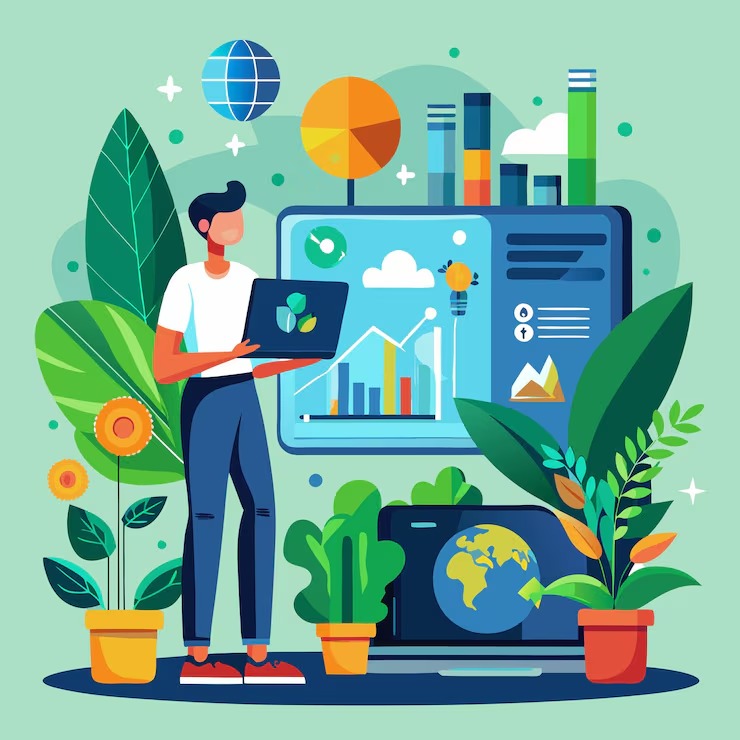
In today’s business environment, sustainability isn’t just a buzzword — it’s a strategic imperative. Companies of all sizes are under increasing pressure from consumers, investors, regulators, and employees to transparently disclose their environmental, social, and governance (ESG) performance. This rising demand has given birth to a booming market for sustainability reporting software — tools designed to help organizations collect, analyze, and report sustainability data accurately and efficiently.
But with so many options available, how do you choose the best sustainability reporting software for your organization? This comprehensive guide will walk you through everything you need to know: what sustainability reporting software is, key features to look for, benefits and challenges, top solutions in the market, and how to make the best choice in 2026.
What is Sustainability Reporting Software?
Sustainability reporting software is a digital platform that enables organizations to manage ESG data — from collection and validation to analysis and reporting. Unlike traditional spreadsheets, which are prone to errors and inefficiencies, these specialized tools streamline workflows, ensure data integrity, and help businesses embed sustainability into their strategic decisions.
These platforms support global reporting standards such as:
- Global Reporting Initiative (GRI)
- Sustainability Accounting Standards Board (SASB)
- Task Force on Climate-related Financial Disclosures (TCFD)
- Carbon Disclosure Project (CDP)
- European Sustainability Reporting Standards (ESRS)
By integrating with internal systems and external data sources, sustainability reporting software transforms raw data into credible, high-quality reports that stakeholders trust.
Why Sustainability Reporting Software Matters
1. Meeting Regulatory Requirements
Governments and regulatory bodies are demanding greater transparency. For example, the European Union’s Corporate Sustainability Reporting Directive (CSRD) requires expanded ESG disclosures, and many countries are following suit with their own mandates. Manual methods simply can’t keep pace with the rigor and scale of these requirements.
2. Enhancing Data Accuracy and Consistency
Human error and inconsistent data definitions are major obstacles when you rely on spreadsheets. Sustainability software automates data capture and applies validation rules, reducing errors and ensuring consistency across reporting periods.
3. Driving Better Decision-Making
Sustainability data isn’t just for external disclosure — it’s a strategic asset. Visual dashboards and analytics empower leaders to identify risk, benchmark performance, and allocate resources where they matter most.
4. Building Trust with Stakeholders
Investors, customers, and partners seek transparency and authenticity. A credible report backed by robust software signals to stakeholders that your organization is serious about sustainability.
Key Features of the Best Sustainability Reporting Software
Not all sustainability reporting tools are created equal. When evaluating options, look for the following features:
1. Robust Data Integration
Great tools can pull data from multiple sources — ERP systems, energy meters, HR systems, suppliers, and more — minimizing manual entry and centralizing data management.
2. Standardized Framework Support
Ensure the software supports key reporting frameworks (GRI, SASB, TCFD, CDP, ESRS, etc.) and can produce aligned disclosures effortlessly.
3. Customizable Dashboards and Analytics
Interactive dashboards help stakeholders visualize performance and trends over time. The ability to customize views for different audiences — executives, sustainability teams, or board members — is crucial.
4. Automated Calculations and Validation
Automatic calculations (e.g., carbon emissions, water usage intensity) and validation checks help maintain data integrity and save time.
5. Collaboration and Workflow Management
Sustainability reporting is cross-functional. The software should provide a workflow engine that enables task assignment, approvals, version control, and audit trails.
6. Scenario Analysis and Forecasting
Advanced solutions allow companies to model future sustainability scenarios — essential for climate risk analysis and strategic planning.
7. Scalability and Security
Whether you’re a mid-sized business or a global enterprise, the platform must scale with your needs. Additionally, data security and compliance with privacy regulations (e.g., GDPR) are non-negotiable.
Benefits of Using Sustainability Reporting Software
1. Saves Time and Resources
Automated data collection and report generation save countless hours compared to manual processes.
2. Improves Report Quality
Standardized data processing minimizes errors, producing higher-quality reports that pass stakeholder scrutiny.
3. Encourages Cross-Department Collaboration
Centralized platforms break down silos, fostering coordinated action across finance, operations, HR, and sustainability teams.
4. Enhances Visibility on Key Metrics
With real-time dashboards and alerts, leaders can stay ahead of performance issues and opportunities.
5. Supports Strategic ESG Planning
Software isn’t just about past performance — it empowers organizations to set targets, track progress, and pivot strategies based on data-driven insights.
Challenges and How to Overcome Them
While sustainability reporting software delivers immense value, organizations may face some challenges during implementation:
1. Data Fragmentation
Organizations often struggle with scattered data across departments. To address this, prioritize platforms with strong data integration capabilities and invest in change management.
2. Lack of Internal Expertise
Some teams lack experience with ESG metrics or reporting frameworks. Training and working with consultants — especially during onboarding — can accelerate adoption.
3. Integration with Legacy Systems
Older systems may not easily exchange data with modern platforms. Choosing software with flexible APIs and integration partners helps bridge this gap.
4. Cost Considerations
Enterprise-grade solutions can be costly. However, the cost of poor sustainability reporting — including regulatory risk, lost investment, and reputational damage — often outweighs the investment in good software.
Top Sustainability Reporting Software Platforms in 2026
The sustainability reporting software landscape is diverse. Below are some of the most widely recognized solutions — each with unique strengths depending on your organization’s size and needs. (Note: Not an exhaustive list, but a curated selection.)
1. EcoStratus Insights
Best for: Comprehensive ESG strategy and reporting
Strengths:
- Deep analytics and scenario planning
- Excellent support for global standards
- Strong integration capabilities
EcoStratus Insights stands out for its strategic planning features and robust dashboarding, making it ideal for enterprises with mature sustainability programs.
2. GreenData Hub
Best for: Data automation and emissions tracking
Strengths:
- Powerful automated data capture from IoT and enterprise systems
- Advanced greenhouse gas (GHG) calculation modules
- User-friendly interfaces
GreenData Hub excels in reducing manual workloads and delivering accurate environmental performance metrics.
3. SustainPro Cloud
Best for: Mid-sized companies scaling ESG efforts
Strengths:
- Balanced cost-performance ratio
- Easy onboarding and workflow tools
- Good template support for GRI and CDP
SustainPro Cloud is a scalable option for companies stepping up from spreadsheets but not ready for large enterprise platforms.
4. ImpactVision 360
Best for: Visual storytelling and stakeholder engagement
Strengths:
- Responsive dashboards and visual narratives
- Customizable report layouts
- Excellent mobile access
ImpactVision 360 puts heavy emphasis on turning data into compelling stakeholder communications.
5. TerraMetrics Suite
Best for: Complex multinational reporting
Strengths:
- Handles multi-entity, multi-regional reporting with ease
- Strong audit trails and compliance checks
- Integrated audit and assurance modules
TerraMetrics Suite is built for organizations with complex reporting requirements and stringent compliance needs.
How to Choose the Right Software for Your Business
Selecting the best sustainability reporting software requires careful evaluation. Here’s a simple step-by-step approach:
Step 1: Define Your Goals
Are you focused on regulatory compliance, investor reporting, operational insights, or all of the above? Knowing your priorities narrows the field.
Step 2: Inventory Your Data Sources
Understand where your ESG data currently lives — finance systems, HR, energy meters, suppliers — and choose a tool that can integrate seamlessly.
Step 3: Map Out Reporting Frameworks
Identify which reporting standards matter most to your stakeholders. Ensure the software supports those frameworks natively.
Step 4: Evaluate Budget and Scalability
Balance upfront costs with long-term value. Consider total cost of ownership, including implementation, training, and maintenance.
Step 5: Engage Key Stakeholders
Get input from sustainability leaders, IT, finance, and business unit heads. Broad engagement ensures the solution addresses real needs.
Step 6: Ask for Demos and References
Live demonstrations and customer references help you assess ease of use and vendor support reliability.
Final Thoughts
Sustainability reporting is no longer optional — it’s central to how businesses operate, innovate, and earn trust. The right sustainability reporting software can be a game-changer, transforming fragmented data into insights that drive performance, meet stakeholder expectations, and future-proof your organization.
In 2026, the best sustainability reporting tools are not just reporting engines — they’re strategic enablers that help companies embed ESG thinking into the heart of operations. Choosing wisely will give you the clarity, credibility, and competitive edge your organization needs in a world where sustainability matters more than ever. Read More: Why ESG Risk Management Matters and How 4Scope Makes It Easy



Leave a comment