
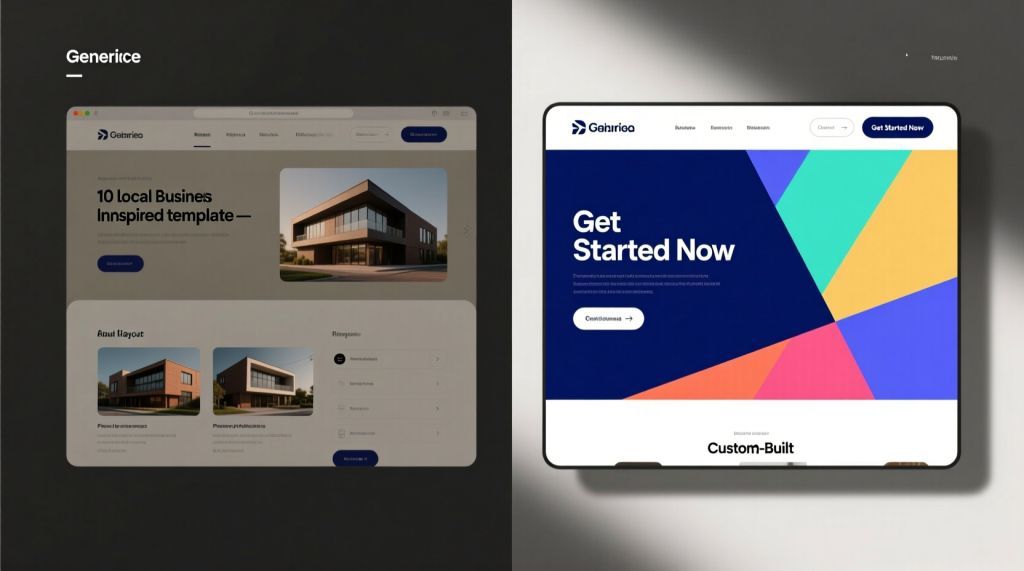
Every business needs a website—it’s your digital front door, your brand’s first handshake, your 24/7 sales pitch. The real debate is whether to hire a website designer to craft a custom site or opt for a pre-made template to save time and money.
Templates look appealing for their low cost and quick setup, but custom design offers benefits that might make it worth the investment for some businesses. Let’s explore the pros and cons to help you decide what’s best for your needs.
Understanding Custom Web Design
Custom web design isn’t just about choosing colors or adding a logo. It’s like hiring a chef to create a dish tailored to your tastes. A website designer starts by learning your business, maps out user journeys, and builds every feature to match your goals.
Templates, by contrast, are like grabbing a pre-made meal from the store. You can add some spices or reheat it, but the core recipe is set. They’re affordable and fast but often don’t fully reflect your brand’s unique needs.
The Benefits of Going Custom
A Unique Brand Presence
Picture scrolling through websites that all feel identical—same structure, same buttons, same vibe. They’re forgettable. A website designer creates a site that’s distinctly yours, helping your brand shine in a crowded online world.
Focused on Your Customers
A website designer doesn’t just care about looks—they prioritize what your audience needs. For instance, a restaurant’s site might need bold visuals and an easy reservation system, while a freelancer’s site might focus on clear contact forms. Templates often force you to work within their rigid framework, which can lead to a frustrating user experience.
Ready for Expansion
Your business will change over time. Maybe you’ll add an online shop, a blog, or a members-only area later. A custom site, built by a website designer, can be designed to accommodate these changes. Templates, however, can struggle to handle major updates, like trying to turn a small tent into a full house.
Better Speed and Performance
Slow websites turn visitors away. Templates often come with heavy code to support multiple scenarios, which can slow things down. A website designer builds a streamlined site tailored to your needs, resulting in faster load times. This keeps users happy and can improve your search engine visibility.
The Challenges of Custom Web Design
Bigger Budget Needed
Custom sites aren’t cheap. A template might cost a few hundred dollars, while a custom site can easily hit the thousands, depending on its scope. For small businesses, that money might be better spent on advertising or operations.
Longer Development Time
Templates can get you online in days. A custom site, even with an experienced website designer, might take weeks or months to launch. If you’re in a hurry to establish a digital presence, the delay can feel like a dealbreaker.
Ongoing Expert Needs
Templates often come with intuitive tools for updating text or images yourself. Custom sites, however, may require a website designer for even small changes, especially if they involve technical work. This can lead to ongoing costs and less independence.
Risk of Feature Overload
When you’re investing in a custom site, it’s tempting to add every possible feature. But just like buying a high-end appliance you barely use, you might end up with a site that’s unnecessarily complex. A website designer can help you focus, but it’s easy to overspend if you’re not careful.
A Real-Life Comparison
Think of this choice like buying a pair of shoes. A template is like a budget pair from a chain store—affordable and ready to wear. A custom site is like a pair crafted by a cobbler to fit your feet perfectly. The budget pair works for casual use, but the custom one offers better comfort and durability.
The right option depends on your goals and resources.
Choosing the Best Path
If you’re a solopreneur, small retailer, or just getting started, a template can provide a polished look without breaking the bank. It’s a practical choice when you need to get online fast and focus on growth.
But if your website is central to your business—like an e-commerce store, a service platform, or a subscription site—a custom site could be worth it. A website designer Singapore can optimize the user experience, like simplifying checkout or improving navigation, which can directly boost sales. Ask yourself: if a poorly designed site costs you one sale, would that loss outweigh the cost of a custom design? If so, it’s a smart investment.
The Compromise Option
You don’t always have to pick between fully custom or fully templated. Many website designers offer semi-custom solutions, starting with a flexible framework and customizing it to your brand. It’s like buying a fixer-upper home and renovating it—you get a tailored result without the full cost or timeline of a custom build. This often works well for businesses seeking uniqueness on a budget.
Wrapping Up
Hiring a website designer for a custom site isn’t always the right move. For some, a template is a quick, cost-effective way to get online. For others, a custom design is a strategic investment that drives growth and sets them apart.
The key is to assess your business’s current needs and future goals. If your site is just a digital placeholder, a template might suffice. But if it’s a core driver of your success, a custom site built by a website designer could deliver big returns. Clarify your priorities, and the best choice will become clear.


Leave a comment