
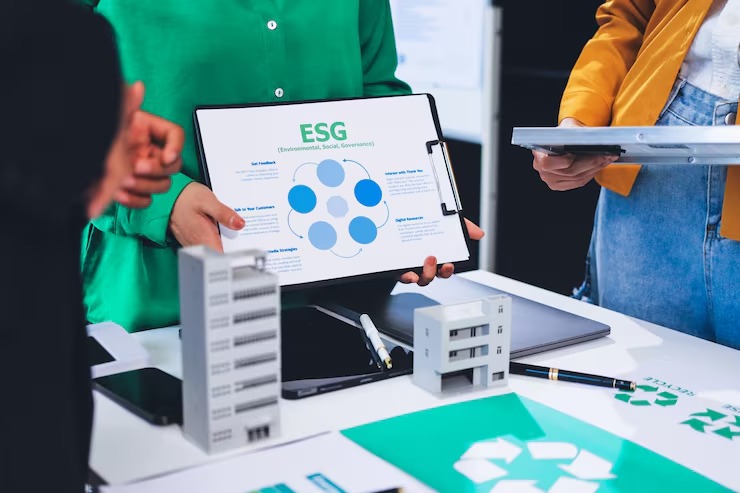
In the digital ecosystem of 2026, user experience (UX) has evolved from a functional requirement into a sophisticated blend of psychological restoration, ethical AI integration, and seamless cross-platform continuity. As we navigate an era where “digital fatigue” is a recognized urban health concern, the way we build products must change. This is Your Comprehensive Guide to the UX Design Process, redesigned for the demands of the modern world.
Whether you are a startup founder or a seasoned product manager, following a structured path is essential to move from a raw concept to a restorative digital experience.
Phase 1: Empathy and Discovery (The Research Foundation)
The first step in Your Comprehensive Guide to the UX Design Process is not sketching; it is listening. In 2026, research has shifted toward “Continuous Discovery.” Designers no longer rely on static personas but on dynamic behavioral data.
- Stakeholder Interviews: Align the business goals with user needs.
- AI-Augmented User Research: Utilize tools like UserTesting to analyze sentiment and tone in real-time, allowing designers to identify pain points that users might not even articulate.
- The Urban User Context: For 2026, consider the “Urban UX” factor—how does your app perform while someone is commuting, dealing with high noise levels, or using a device with one hand?
Phase 2: Definition and Strategy (The Blueprint)
Once the data is gathered, the next phase in Your Comprehensive Guide to the UX Design Process is synthesis. You must define the “Job to be Done.”
- User Journey Mapping: Visualize the emotional highs and lows of the user as they interact with your brand.
- Defining the North Star Metric: What is the single most important action the user should take? In 2026, this metric often focuses on “Time Well Spent” rather than just “Time on Site.”
- Content Strategy: Before a single pixel is placed, the narrative must be clear. As highlighted in Designing for Nature, the language should be grounded, transparent, and empathetic.
Phase 3: Ideation and Information Architecture
This is where the “Rewilding” of the digital space begins. Your Comprehensive Guide to the UX Design Process encourages moving away from rigid, mechanical grids toward more organic, intuitive structures.
- Sitemaps and User Flows: Map out the logical path.
- Biophilic Wireframing: Start experimenting with layouts that mimic natural hierarchies. Avoid the “infinite scroll” in favor of “intentional discovery.”
- Accessibility First: Use the WebAIM Contrast Checker at this stage to ensure your architecture is inclusive from the ground up.
Phase 4: Prototyping (The Interactive Skeleton)
In 2026, static wireframes are relics. Your Comprehensive Guide to the UX Design Process relies on “High-Fidelity Prototyping” that feels like a real product.
- Rapid Iteration: Use Figma to build interactive flows. In 2026, Figma’s AI-native features allow designers to generate multiple layout variations based on natural language prompts, speeding up the “low-fidelity” stage so humans can focus on “high-fidelity” refinement.
- Micro-interactions: Focus on the “haptics” of the experience. Does the button click feel like a mechanical switch or a soft touch? In the urban digital landscape, these small details reduce friction and increase delight.
Phase 5: Visual Design (The Biophilic Layer)
This phase of Your Comprehensive Guide to the UX Design Process is where aesthetics meet biology. In 2026, “Nature-Inspired UX for Urban Users” is the gold standard.
- Color Theory: Move beyond “Tech Blue.” Utilize palettes derived from earth, sky, and stone to lower the user’s heart rate.
- Typography: Choose typefaces that are highly legible under various lighting conditions—critical for urban professionals on the go.
- Visual Hierarchy: Use depth, shadow, and Gaussian blurs to mimic the way light filters through a forest canopy, providing a sense of space and calm.
Phase 6: Testing and Validation (The Reality Check)
You cannot complete Your Comprehensive Guide to the UX Design Process without rigorous testing. In 2026, we test for more than just “usability”; we test for “wellness.”
- Usability Testing: Watch users attempt to complete tasks. Are they hesitating? Are they confused?
- Biometric Feedback: Some high-end UX labs in 2026 now use eye-tracking and skin conductance tests to measure the stress levels of the user while they interact with the UI.
- A/B Testing: Use Google Optimize (or its 2026 successor) to compare different versions of a feature to see which achieves better user outcomes.
Phase 7: Implementation and Handoff
The final stage of Your Comprehensive Guide to the UX Design Process is ensuring that the vision is executed perfectly by the engineering team.
- Design Systems: Provide a comprehensive library of components, tokens, and documentation.
- Performance Budgeting: Collaborate with developers to ensure that the beautiful biophilic animations don’t slow down the site’s Core Web Vitals.
- Accessibility Documentation: Ensure that every interaction is keyboard-navigable and screen-reader friendly.
The 2026 Evolution: Ethical UX and AI Stewardship
As we conclude Your Comprehensive Guide to the UX Design Process, we must address the ethical dimension. In 2026, a “Comprehensive” process must account for data privacy and algorithmic transparency. Users are increasingly wary of “Dark Patterns”—manipulative UX design intended to trick users into actions they didn’t intend.
An ideal 2026 process is built on Trust. This means being transparent about how AI is using user data and giving the user easy “off-ramps” from automated systems.
Conclusion: A Living Process for a Living Web
The UX design process is not a circle; it is a spiral. Each time you launch a product, you begin the cycle again, armed with more data and deeper insights. By following Your Comprehensive Guide to the UX Design Process, you are doing more than building an interface; you are creating a digital ecosystem that respects the user’s time, mental health, and biological needs.
In the fast-paced urban environment of 2026, the most successful designs will be those that feel less like “technology” and more like a natural extension of the human experience.
Master the UX Process Further
- Learn the Basics: Visit the Interaction Design Foundation for foundational certifications.
- Stay Updated on Trends: Follow the Nielsen Norman Group for the latest in evidence-based UX research.
- Tools for the Trade: Explore Adobe Creative Cloud’s 2026 AI Suite for advanced visual design and prototyping tools.



Leave a comment